
ENGLEWOOD, Colo — The Broncos did not spend draft weekend chasing splash.
They spent it trusting their board.
That was the clearest message from Head Coach Sean Payton and General Manager George Paton after Denver completed the 2026 NFL Draft, a weekend that began with the Broncos already viewing wide receiver Jaylen Waddle as a major addition and ended with a seven-player class built around trench help, offensive support and developmental depth.
“We’re never trying to worry about the splash,” Payton said. “We’re really trying to look at it with the proper vision, the proper grade.”
That philosophy showed up immediately in Denver’s first pick.
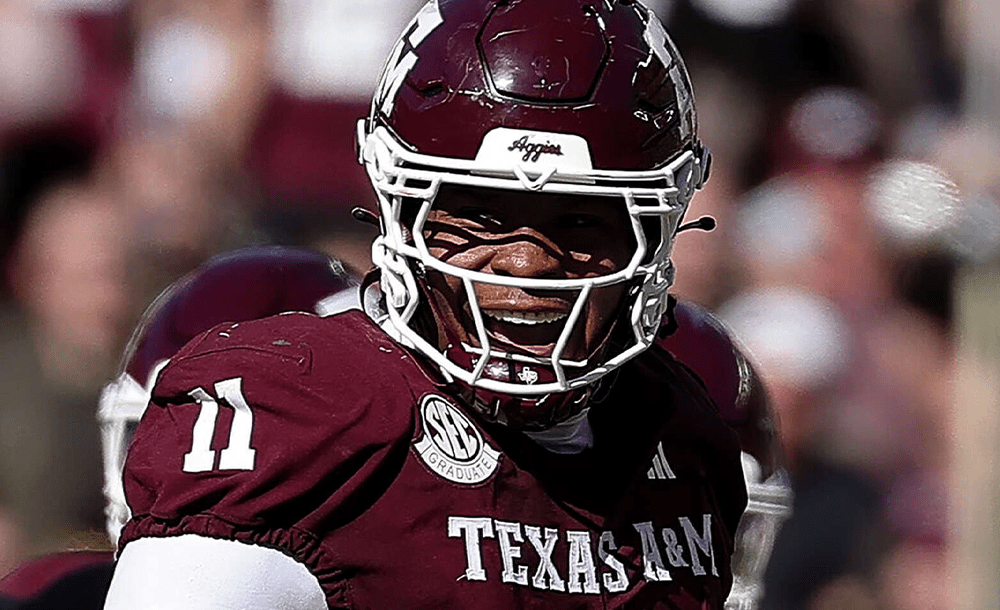
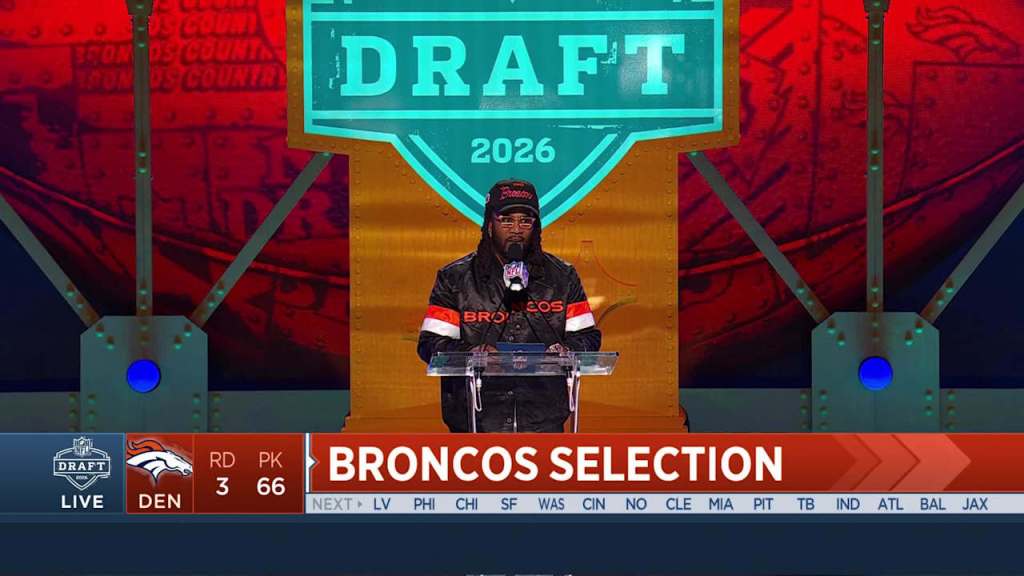
The Broncos traded back from No. 62 to No. 66, added pick No. 182 from Buffalo and still landed Texas A&M defensive lineman Tyler Onyedim. Paton said Denver had a small group of players targeted in that range and that Onyedim was one of them.
“We had six players, and they all started going — the six,” Paton said. “Tyler was one of the six.”
That trade-back mattered because it showed Denver believed it could gain value and still land one of its guys. Payton made it clear why the Broncos were comfortable doing that for Onyedim.
“I think going through this process, it was really the athleticism and playing a position that it’s always hard to find defensive tackles,” Payton said. “His strike, his shed. But it was the athlete, make up. Those were the traits.”
Onyedim’s own first comments fit the tone Denver wants in its room. He did not talk like someone arriving to demand a role. He talked like someone arriving to learn.
“It’s going to be a blessing, being able to learn from the best,” Onyedim said. “They have a really, really good defensive line. I’m excited; I’m happy; I’m excited. I’m just ready to go.”
He also described himself as a player who can move around the front.
“I feel like I’m a versatile player,” Onyedim said. “I can play anywhere on the defensive line.”
For Denver, that pick set the tone. The Broncos wanted to get younger on the lines, and they wanted to do it without forcing the board. Payton said trench players remain some of the hardest players to find when free agency opens, which made the Onyedim selection fit both roster need and long-term team building.
Then came the middle-round stretch Paton called the part of the draft that would define the class.
At No. 108, Denver selected Washington running back Jonah Coleman, a player Payton said the Broncos had graded much higher than where they ultimately got him. Payton compared Coleman’s running style to J.K. Dobbins and called him a physical runner who can play on third down.
“There was a lot to like with him,” Payton said. “He’s very physical. He can play on third down.”
Coleman embraced the fit right away and pointed to what he believes he brings to the backfield.
“You ultimately have a three-headed monster in the run game,” Coleman said. “I believe that’s where it starts, in the trenches.”
He also made it clear that pass protection is part of how he sees his value.
“Now I get to go protect Bo Nix, and I take pride in that,” Coleman said. “I do the dirty work. I do those things that not a lot of people pay attention to.”
Three picks later, Denver used No. 111 on Boise State offensive lineman Kage Casey, a selection that also reflected how the Broncos see roster building. Casey arrives with tackle experience, but Denver likes his versatility and the possibility that he can help at multiple spots.
“Really wherever they want me,” Casey said. “As of now, I don’t know for sure, but wherever they want me, I know I’m going to excel at.”
Payton said Casey’s appeal was tied directly to that flexibility.
“The versatility there with Kage was really attractive,” Payton said.
Casey also gave a revealing answer when asked about his game, one that lines up with what Denver values in offensive linemen.
“I think I play quick, aggressive,” Casey said. “My football intelligence, my ability to read the field and slow down the game for myself… allows me to play fast. I’m an extremely consistent guy. I’m disciplined, and I’m ready to learn wherever I need to be.”
On Day 3, the Broncos added another offensive piece by trading up for NC State tight end Justin Joly at No. 152. Payton described Joly as a different kind of tight end than Dallen Bentley, the Utah product Denver took later in the seventh round. Joly fits more of an “F” role, while Bentley gives Denver a bigger, more in-line option.
Joly said Denver’s vision for him included movement and versatility.
“They just said to me to go play all over the field,” Joly said. “Being used in the backfield, in the slot. … I’m just happy they believe in my skill set.”
He also framed himself as a reliable target for Denver’s quarterback.
“I always feel like my hands work really well, and I’m a security blanket for my quarterback,” Joly said. “When you have a great quarterback like Bo Nix, you live life a little bit easier.”
Bentley, selected at No. 256, described himself as “a really great hybrid tight end” and said he believes he can contribute both in the passing game and with his hand in the dirt. That gave Denver two different developmental swings at the position late in the draft.
The Broncos finished by adding safety Miles Scott at No. 246 and linebacker Red Murdock at No. 257, the final pick of the draft.
Scott may be one of the more interesting developmental bets in the class. A former receiver at Illinois, he transitioned to defense and developed into a playmaker at safety. Payton said Denver became very familiar with Scott because of his connection to current Broncos Pat Bryant and Alex Palczewski.
“With Miles, I think the ball skills,” Paton said. “Very physical for a former receiver, and instincts for a guy who hasn’t played it all that long.”
Scott’s own story adds to the appeal.
“It was a tough transition,” Scott said. “But I just trusted God and I worked.”
His receiver background still shows up in the way he talks about playing the ball.
“That is just a testament of me playing receiver and being able to catch the ball and run,” Scott said. “That’s all receivers do.”
Murdock, meanwhile, arrives with a reputation for production and toughness. Paton called him “a tackling machine” and pointed to his nose for the ball and relentless motor. Murdock’s 17 forced fumbles made him one of the more productive takeaway players in college football, and his first comments sounded exactly like what the Broncos wanted to hear from the final pick in the draft.
“I’m a team-first guy,” Murdock said. “The main thing now is just being able to help the team be able to win.”
By the end of the weekend, the shape of the Broncos’ draft was clear.
This was not a class built to win the internet.
It was built to strengthen the roster around a team that believes it can compete now. Denver added a hard-to-find defensive lineman, a physical running back, offensive line versatility, two different tight end skill sets and late defensive depth with special-teams value. And throughout it all, Payton and Paton kept coming back to the same idea: trust the grade, trust the fit and trust the board.
“That’s being smart to the board,” Payton said.
For the Broncos, that was the story of the weekend.