
DENVER — By trading for Jaylen Waddle, Denver changed the conversation around its 2026 draft before draft week even got here. The receiver room got faster. The offense got more explosive. And the price was real: the Broncos no longer own a first-round pick or a third-round pick. Their draft now starts at No. 62 overall, and the class is down to seven total selections.
That is exactly why Sean Payton’s latest comments matter.
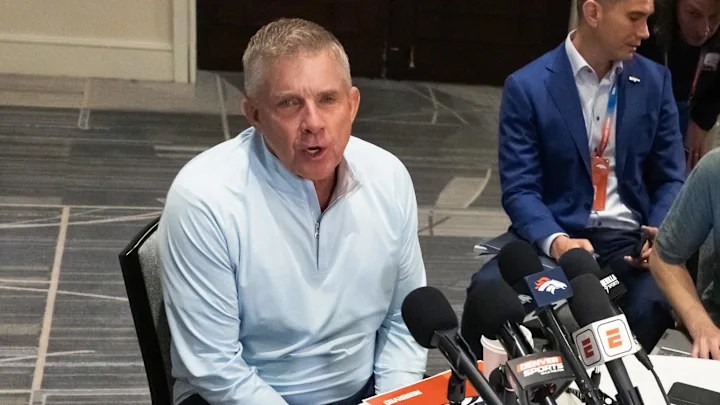
If you want the cleanest way to understand what Denver should be trying to do in this draft, start with the coach’s own philosophy. Payton pushed back hard on the noise around the Broncos’ quieter offseason and said, “Frenzy is what you don’t want.” His follow-up was even more revealing: Denver’s approach is to be steady, make the right decision and stick with the plan. That is not just a free-agency thought. Payton said the same idea applies to the draft.
That should be the entire frame for Denver’s April.
The Broncos do not need a draft that wins the internet. They need one that makes the roster make more sense. Waddle already gave Denver the splash. Now the draft has to provide structure. It has to provide support. It has to tighten the build around Bo Nix rather than chase another headline.
And that is where the roster puzzle gets interesting.
Payton described the process as sorting through the “must needs and wants” on the depth chart, and in that answer he specifically mentioned linebacker, tight end and running back. That tracks with what Denver’s offseason looks like right now. The Broncos re-signed pieces they trust, kept continuity in the building and then used their one major swing on Waddle. The next step is not random aggression. It is targeted help.
Tight end still feels like the cleanest place to start.
Yes, Denver brought back Adam Trautman, Lucas Krull and Nate Adkins. That raises the floor of the room. It does not automatically create the kind of difference-maker who changes coverages and makes life easier on a young quarterback. If Denver wants to help Nix operate cleaner and faster, it still makes sense to look hard at a tight end who can stress the middle of the field and expand what Sean Payton can call without tipping his hand.
Linebacker still belongs near the top of the conversation, too.
The Broncos brought back Alex Singleton and Justin Strnad, and that matters. There is experience there. There is short-term steadiness there. But the bigger question has not gone away. Denver still needs more future at the position — more range, more coverage ability and more long-term runway in the middle of the defense. Even Payton’s discussion about Jonah Elliss taking some inside snaps hints at a staff still working through how best to shape that part of the depth chart.
That is why this draft should not be viewed as some dramatic star hunt.
Payton made that clear when he said, “It’s not ‘let’s run it back.’” He is right. This is not a team standing still. This is a team trying to improve from a stronger starting point, and that can be harder than a rebuild because the decisions have to be more precise. Denver does not need five shiny ideas. It needs two or three players who clearly solve something.
That is also why the pressure point is bigger than one pick.
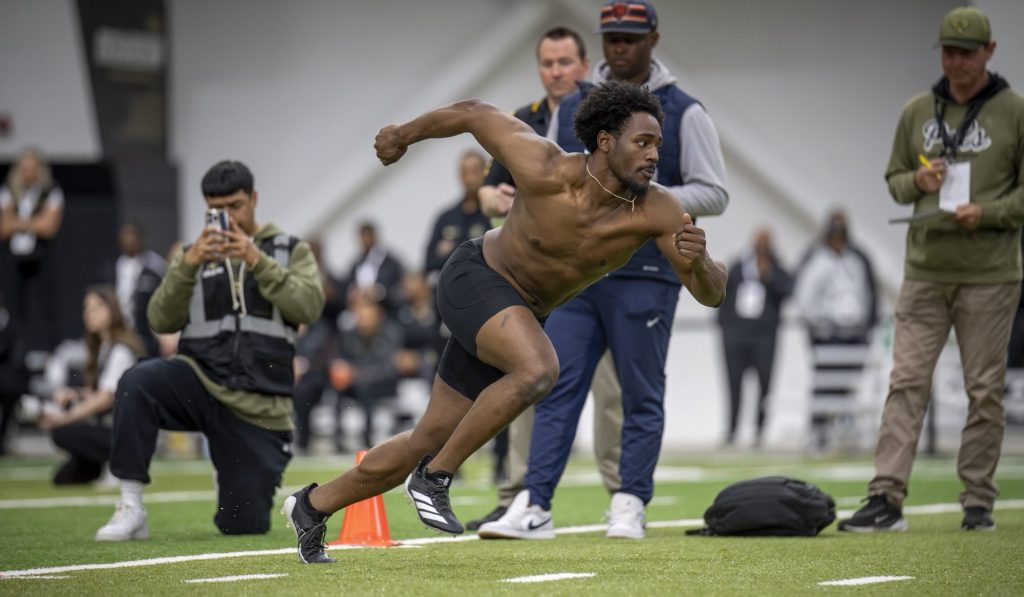
Yes, No. 62 matters. But this class will likely be defined by what happens from No. 62 through Denver’s two fourth-rounders at No. 108 and No. 111. That stretch is where the Broncos have to turn one draft into multiple roster answers. One immediate offensive helper. One future-minded defender. One solid trench piece. That is how a seven-pick class punches above its weight.
There is also room here for a quieter smart pick.
Safety is not the loudest need on the board, which is exactly why it is worth watching. Good teams often draft future contributors before the position becomes an emergency. Denver does not have to force that selection, but if the right value shows up on Day 2 or early Day 3, it would fit the entire thesis of this draft: be early, be smart and avoid shopping from panic.
That is the bigger point Payton was making all along.
The Broncos were not passive this offseason. They were selective. They kept their own core, waited for the right opportunity and then struck when Waddle became available. Now the draft has to finish the job. Not with chaos. Not with reaction. Not with the kind of reach that makes fans feel good for one night and coaches uneasy by June. Denver’s best draft is the one that looks a little boring on the outside and a lot smarter by December.
The Waddle trade already gave the Broncos their headline.
The draft should give them support.
And if Denver leaves April having helped Bo Nix, added future speed and range to the front seven, reinforced the trenches and found one quiet value in the secondary, then the Broncos will have done exactly what Payton says they should be doing now: skip the frenzy and finish the puzzle.
Finished the read? Download Denver Sports Media / The Route Room’s illustrated Denver Broncos 2026 Draft Guide below for the full visual breakdown of team needs, prospect fits, round-by-round targets and best-case draft scenarios.