
The Denver Broncos already made their splash.
That is the most important thing to understand about their 2026 NFL Draft.
By trading for Jaylen Waddle, Denver changed the conversation before draft week ever arrived. The Broncos gave themselves more speed, more explosiveness and more juice for Bo Nix’s supporting cast, but they also gave up the luxury of a first-round swing. For the third time in five years, Denver will go into the draft without a first-round selection. This time, the Broncos will not pick until No. 62 overall.
And inside the building, that is not being treated like a problem.
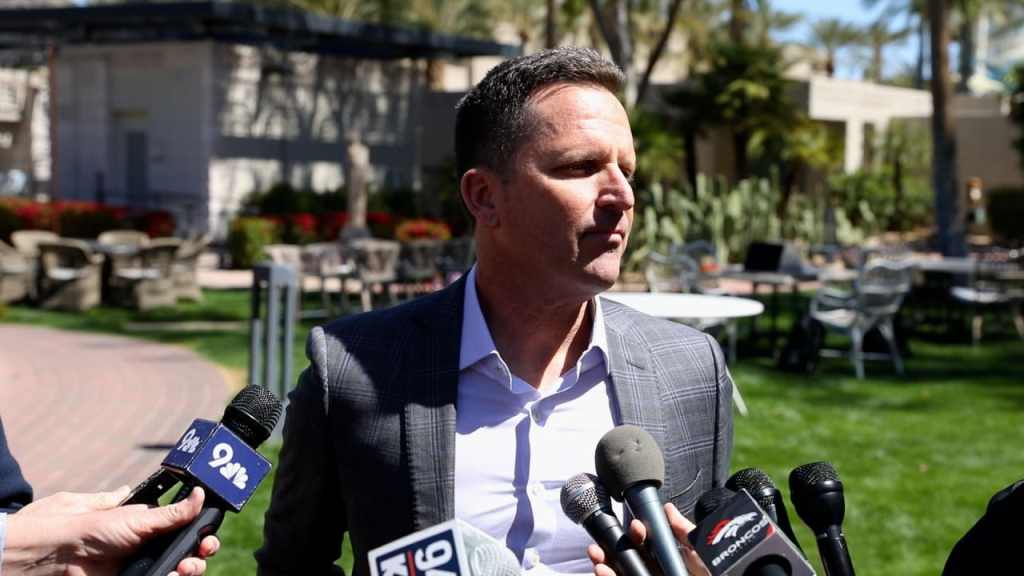
“It’s our wheelhouse,” general manager George Paton said at the league meetings in Phoenix, via 9NEWS.
That line matters because it tells you how the Broncos are framing this draft internally. They are not talking like a team that feels boxed in. They are talking like a team that believes this is where it has done some of its best work.
Paton has a case.
The Broncos did not pick until No. 64 in the 2022 draft and came away with Nik Bonitto, who developed into an All-Pro pass rusher. They did not pick until No. 63 in 2023 and landed Marvin Mims Jr., who became an All-Pro returner and an offensive weapon with real value. So when Denver says it can live without a first-round pick, it is not blind optimism. It is betting on a part of the board where it has found impact players before.
That does not mean this draft is easy.
It means this draft is specific.
The Broncos no longer need the draft to provide their headline move. Waddle already did that. Now the draft has to provide something harder: structure, depth and useful answers. Denver has seven picks. It starts at No. 62. It owns two fourth-round picks near the top of the round. And that means this class has less room for drift than a normal draft. The Broncos do not need to chase noise. They need to hit on role clarity.
Paton all but said as much when he explained the benefit of not having to prepare for a first-round selection.
“You can just hone in on that second round,” he said. “If you have a first round, you’re honing in everywhere in the draft. We can really dig in who we think is going to be there. And we have two fourth-rounders at the top of the fourth so we can hone in there.”
That is the real draft map.
The pressure point is not just No. 62. It is No. 62 plus those two early fourth-rounders. If Denver nails those spots, the class can work. If it misses there, the lack of a first-round pick will feel much bigger.
The question now is what, exactly, the Broncos should be targeting.
Tight end still feels like the cleanest answer.
Yes, Denver brought back familiar names. Yes, the room has bodies. But the bigger question remains whether the Broncos have a tight end who changes the math for a defense. If Sean Payton wants to keep expanding the offense around Nix, Denver still needs a true matchup piece at the position — someone who can stress coverage, create cleaner middle-of-the-field throws and give the offense more flexibility without tipping its hand. Waddle helped the receiver room. He did not erase the value of adding another pass-game answer.
That is why tight end still feels like Denver’s most obvious draft need even after the splash trade.
Linebacker is right there, too, even if it is discussed less loudly.
The Broncos have veteran experience. They have familiarity. But they still need more future there. More range. More coverage ability. More long-term juice in the middle of the defense. This is not just about finding a backup who can survive snaps. It is about identifying a player who can eventually become a real answer in a league that constantly attacks second-level defenders in space.
If Denver comes out of this draft with a tight end who can help Bo Nix and a linebacker who can grow into a meaningful role, the class already starts to make sense.
After that, the middle rounds become about building out the roster intelligently.
Interior defensive line may not be the sexiest topic, but it is exactly the kind of need that serious teams address before it becomes a problem. Same for safety depth. Same for developmental offensive help. The Broncos do not need every pick to become a starter. They do need this class to make the roster sturdier, cheaper and more complete.
That is where the Broncos’ quiet free-agency strategy becomes relevant.
Paton defended Denver’s subdued approach to signing outside players this spring, saying, “We had a plan, we executed it. We signed a bunch of really good players. I know a lot of them were our own. I think (17). We won games with those guys. They fit the culture. Offense, defense and special teams.”
That quote explains a lot about how Denver sees itself right now.
The Broncos did not act like a rebuilding team because they do not believe they are one. They acted like a team that wanted to keep its own core intact and preserve flexibility for the right opportunity. That patience mattered.
“You can’t make that big splash every year especially if you’re extending that many guys,” Paton said. “So that patience gave us the flexibility when something unique came around like the Waddle trade.”
That may be the clearest summary of Denver’s offseason.
The Broncos used restraint to create optionality. They stayed disciplined in outside free agency. They invested in continuity. Then, when a player they viewed as a real difference-maker became available, they struck. The result is a roster that looks more balanced at the top but also a draft board that demands precision.
That is why this class should not be judged like a normal class.
This is not a draft about star-chasing. It is a draft about finishing the roster. About helping the moves Denver already made. About finding players whose roles make immediate sense. The Broncos need a class that supports the Waddle trade, not one that tries to compete with it.
And the front office clearly believes its draft position is manageable.
Paton pointed to Denver’s recent success in that range and added, “I think we’re at 62 and Bonitto was 64, Mims was 63. So we’ve done a nice job there and we’ve got to keep it up.”
That is the challenge.
No. 62 is not a disaster spot. For Denver, it has been fertile ground. But it only stays that way if the Broncos continue identifying players with clear traits, real fit and a fast path to usefulness. They do not need the loudest draft. They need the smartest one.
A successful Broncos draft should look something like this: one immediate offensive helper, one future-minded defender, one trench piece, one smart value selection in the secondary or on special teams and a class that makes the 53-man roster harder to poke holes in by December.
That is not flashy.
It is better.
Because after the Jaylen Waddle trade, the Broncos do not need a draft that wins the internet. They need one that makes the rest of the roster make more sense.