
The hardest part of the NFL calendar isn’t the draft, free agency, or even training camp. It’s the first week after your season ends, the exit interviews, the physicals, the quiet confirmation that the ride is over.
That’s where the Broncos are now: coming off a season that put them back on the league’s biggest stage, and a finish that still stings because it was right there.
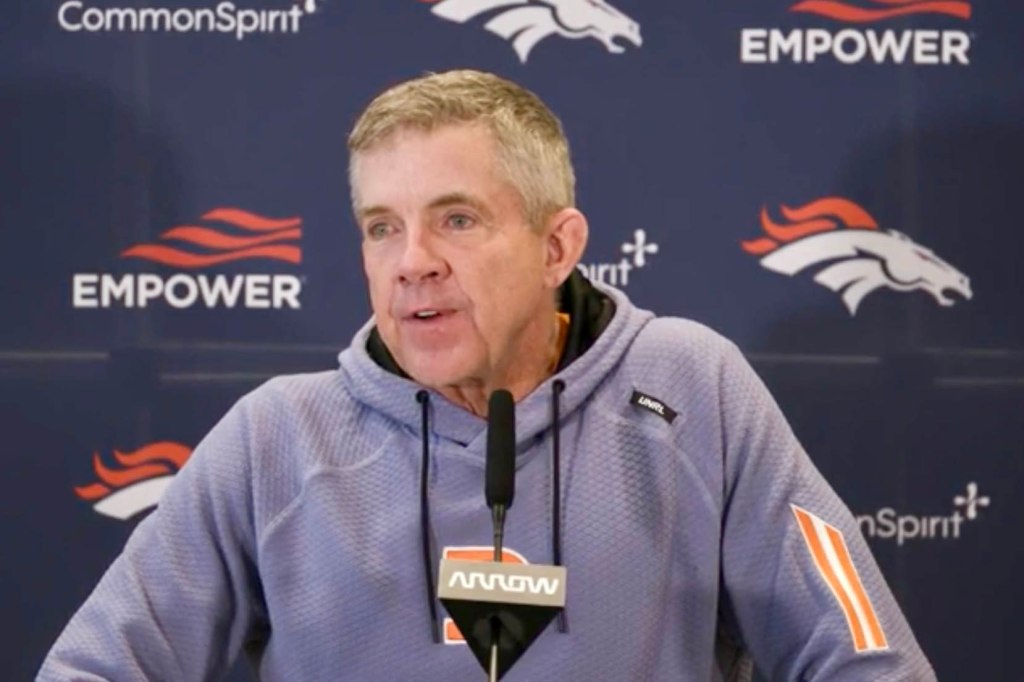
Head coach Sean Payton called it “the finality of it all,” as the team begins mapping out an offseason calendar that will stretch from these final medical evaluations all the way to training camp.
“I don’t think there are many major medical [questions], like, will they be ready for the start of training camp?” Payton said, noting early optimism from the initial review.
But the real work isn’t a calendar. It’s what comes next for a roster that climbed to the AFC’s top seed and the franchise’s best season in a decade — only to be sent home before the Super Bowl.
Payton’s honesty on the AFC Championship turning point
Payton didn’t flinch when asked about the coaching decisions that will live in the rewind.
On the fourth-down sequence that swung early momentum, he wasn’t interested in pretending it didn’t bother him.
“I don’t know which is the greater regret the decision, certainly the play call,” Payton said. And in a moment that felt like classic Payton blunt, a little funny, and still irritated, he lamented losing the old-school pause that used to come with a measurement.
“It also buys you time to think of the call you want,” he said. “So we used the time out. I think probably what irks me more is the call more than the decision… There are those moments that you wish you had back.”
That’s the line that matters because it signals how Payton operates. He doesn’t treat the postseason like an inspirational poster. He treats it like film: details, decisions, and a standard that doesn’t soften because the year was “successful.”
And when asked about the noise that always follows playoff losses, Payton made it clear he’s not interested.
“I don’t pay attention to all the criticism,” he said. “If I paid attention to that, I don’t know that we’d ever be in this position.”
“Start of the race” not “next step”
Payton’s most telling answer might’ve been about language.
Asked if this season’s success can be used as a building block, he pushed back on the cliché that every contender uses when the season ends.
“I will not use that word, ‘take the next step,’” Payton said. “We go back to the start of the race. Every 32 teams have to go back… and get ready to start again.”
That’s not coach-speak, it’s a warning. The league doesn’t care what you were in January. It only cares what you are in September. Payton’s point: the Broncos don’t get to skip steps because they were close.
But he also pointed to what’s different this time around: more flexibility, fewer constraints, and a roster that already knows what winning football requires.
“We do that without dead [salary] cap,” Payton said. “We do that with a foundation in place. We do that with optimism and confidence from the journey we’ve been on.”
And he put it in terms anyone can understand:
“If I said, I’m going give you $50,000 to decorate your home or $200,000, your home’s going to look nicer… I think the same takes place with our sport.”
Translation: more cap room doesn’t guarantee anything but it gives you options if you’re smart.

Paton: “We got so close” and the league knows Denver’s back
General manager George Paton didn’t try to mask the emotion. He called the ending “extra tough,” because of what the Broncos accomplished before it ended.
He cited a list that reads like a full reset of Denver’s recent history: AFC Championship appearance, No. 1 seed, division title for the first time in 10 years, 11 straight wins, and 14 regular-season wins to tie a team record.
“I couldn’t be more proud of our players, our coaches and our staff for everything they achieved this season,” Paton said.
He also credited the structure at the top, ownership resources, Payton’s culture, and the belief that grew inside the building as the wins stacked up.
Payton “puts it out there,” Paton said with a laugh. “The players… feed off that. The whole building feeds off it.”
But Paton didn’t frame this like a “run it back” moment. He framed it like a scouting meeting.
“We’ll do a deep dive on this team like we do every year,” he said. “We will determine our needs. We’ll be aggressive in filling those needs.”
The biggest offseason truths: run game urgency, receiver fundamentals, and the “real” roster stack
If you want the clearest view of what Denver will prioritize, Payton and Paton basically drew the map.
1) The run game has to travel.
Payton said the Broncos have moments where they can control games, but not enough — especially when they want to get under center and impose their will.
“We’ve been able to do it a few times, but not as much as I’d like,” Payton said. “That’ll be an important study and with urgency.”
He also noted the loss of J.K. Dobbins hit more than the stat sheet — it hit the locker room.
2) The receiver room isn’t getting excused, it’s getting coached.
Payton didn’t say he needs a brand-new room. He said the current room needs to catch the football like professionals.
“There were too many [drops] even down the stretch,” he said, then went into a full technique breakdown: thumbs together unless it’s below the belly button.
That’s not a throwaway detail. That’s Payton telling you where practice time is going.
3) Paton is going to “stack” the roster, especially vs. the AFC West.
Paton described a week-long evaluation process where Denver compares itself not just to the league, but specifically to the division.
“We’ll stack each position and just determine where we need to get better,” he said. “It’s a puzzle.”
That’s the front office telling you no spot is safe just because the season was special.
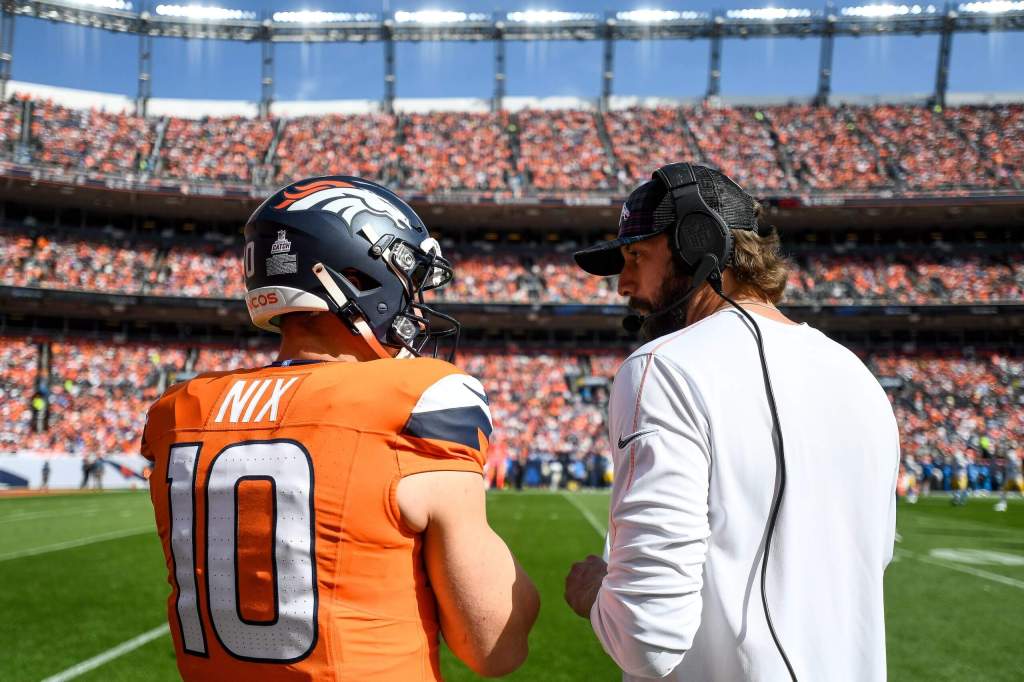
Bo Nix: rehab now, expectations later
Payton said quarterback Bo Nix is “doing well,” and described the day-to-day rehab process in vivid detail — scooter time, then crutches, then a walking boot.
“He’s handling it like a pro,” Payton said, acknowledging the mental grind of being injured while the season is still moving around you.
Paton added the clearest timeline: “close to May” for Nix’s return, while noting he’s still in the building working.
More important than the calendar, though, is how Denver talks about Nix as the franchise’s present tense.
Paton measured him the way teams actually measure quarterbacks: wins.
“There has been no quarterback in his first two years who has won more than… Bo,” Paton said. “He had seven game-winning drives… he has that ‘it’ factor.”
That quote is the organizational stance. They’re not shopping for hope anymore. They believe they already have it.
Why Denver believes it can live here, not just visit
Several veteran voices echoed the same theme: this wasn’t a fluke, and the building feels different.
Offensive tackle Garett Bolles called the loss “one of the most crushing” of his career and then immediately pivoted to why players will want to come to Denver: ownership, facilities, quarterback, line play, and a defense that believes it can dominate.
J.K. Dobbins, speaking from firsthand experience, pointed to the resources, even down to recovery modalities, as a reason he wants to stay: “They get us everything that we need to be successful here.”
That’s how contenders recruit now. Not just with money, with infrastructure.
And Payton emphasized one stat that tends to get overlooked until January: availability.
Denver has ranked near the top of the league in fewest games missed due to injury across the last three years, Payton said, crediting Beau Lowery and the performance staff. That matters because it’s the hidden difference between “great roster” and “healthy roster,” especially when the season goes long.
This season marked our fifth year telling the Broncos’ story at Denver Sports Media. Five seasons of building, learning, growing, and earning the kind of access that lets us bring fans closer than the box score ever could. From training camp heat to playoff cold, from weekly film notes to locker room quotes, we’ve watched this organization climb back into the AFC’s top tier in real time. And if this year proved anything, it’s that Broncos Country is back to “Bo-lieving” and it’s back to expecting.
We’ll be there for what comes next, because the standard in Denver has returned, and this team is chasing something bigger than progress.

You must be logged in to post a comment.